In Croatia, ownership of a house is recorded in the land registry (zemljišna knjiga, colloquially gruntovnica), kept by the municipal courts, while parcels, buildings and land use are recorded in the cadastre (katastar), run by the State Geodetic Administration. For many older houses in Istria, the two registers don't fully agree with each other, or with what actually stands on the ground. Sorting this out before you buy or renovate saves months later.
This guide explains how the two registers work, the typical problems with old Istrian properties and the documents you will hear about. We are a renovation team, not lawyers: an independent lawyer, the notary and a licensed surveyor should check your specific case.
Land registry or cadastre: what is the difference?
The cadastre describes the land: the parcel (katastarska čestica) with its number, shape, area and use, and the buildings on it. The land registry records the legal side: who owns the property and which rights or burdens are attached to it, such as mortgages, easements or a right of way. Where the two differ, the land registry is what counts for ownership.
| Land registry (zemljišna knjiga) | Cadastre (katastar) | |
|---|---|---|
| Kept by | Land registry departments of the municipal courts | State Geodetic Administration (DGU), regional cadastral offices |
| Records | Ownership, co-ownership shares, mortgages, easements and other rights | Parcels, their area and use, buildings, the recorded holder |
| Typical extract | Zemljišnoknjižni izvadak, often called vlasnički list | Posjedovni list and a copy of the cadastral plan |
| Proves ownership? | Yes | No, it shows the recorded holder |
A land registry folio (zemljišnoknjižni uložak) has three sheets: sheet A describes the property (parcels and buildings), sheet B, the vlastovnica or vlasnički list, lists the owners and their shares, and sheet C lists the burdens. That is why people in Istria still say “bring the vlasnički list” when they mean the land registry extract.
Why don't the papers match the house?
Istria was surveyed for the Austrian cadastre between 1818 and 1822, and in a large part of the country the cadastre and land registry are still based on surveys more than a hundred years old. Since then, houses have been built, extended, inherited and divided, often without anyone updating the papers. Typical problems with old Istrian properties:
- The house is not on the map. The cadastral plan shows an empty parcel, or only the original small house without later extensions and outbuildings.
- The parcel is recorded as farmland. The cadastre may describe it as a vineyard, olive grove or pasture. That describes its use, not a planning zone: whether you may build is decided by the spatial plan.
- Dozens of co-owners. Old village houses are often registered to several generations of heirs, some deceased and some living abroad. Every one of them, or their heirs, may need to sign.
- Very old entries. Owners who died decades ago, names from the Austro-Hungarian or Italian period, or parcels divided on paper but not in reality.
- Roads and paths. A path used for decades may cross a private parcel on paper, or your own access may not be legally secured at all.
- Boundaries that don't follow the walls. Old dry-stone walls and the lines on the cadastral plan can differ by metres.
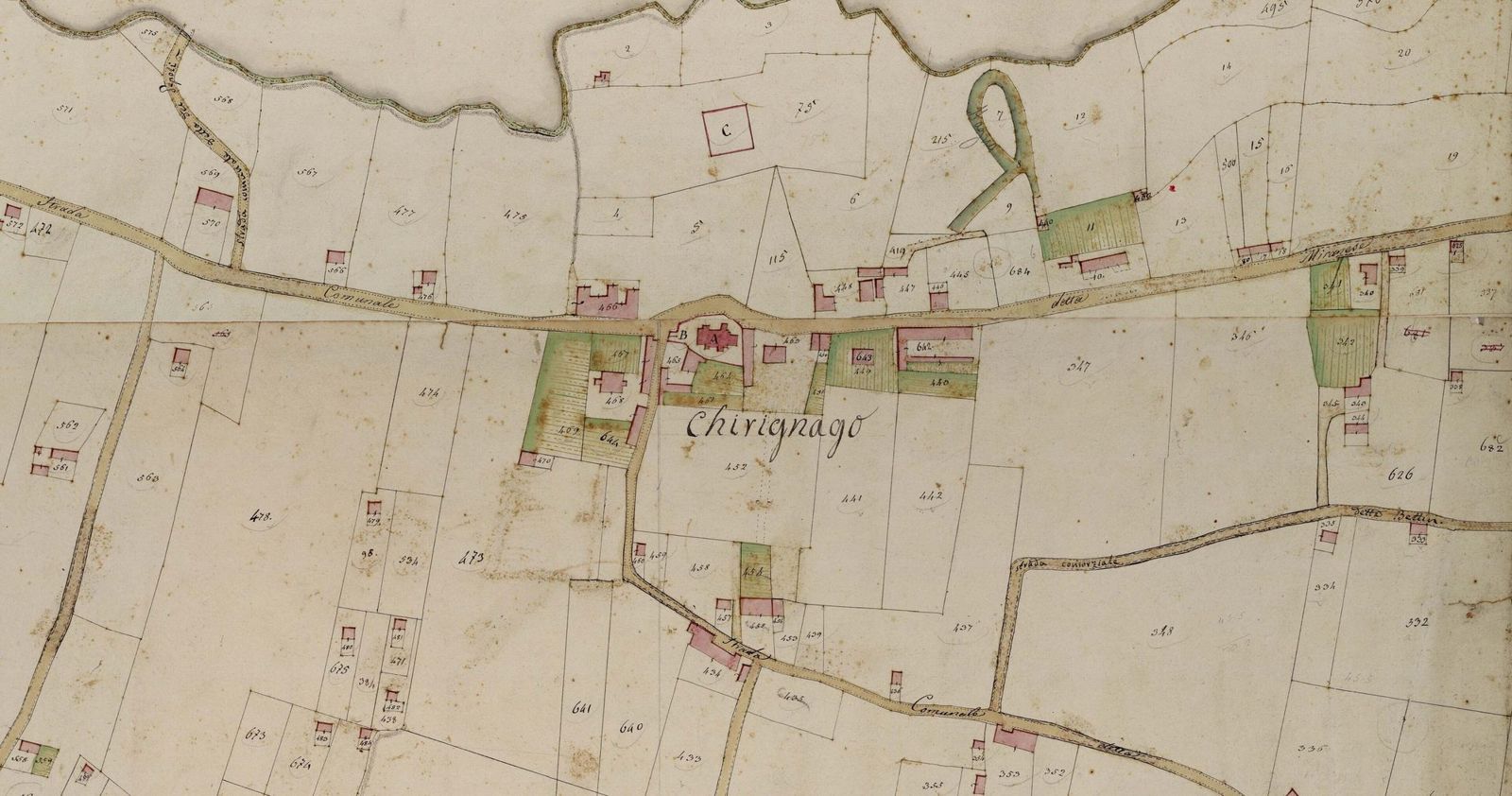
The national programme Uređena zemlja (“Organised Land”) and new cadastral surveys in parts of Istria are slowly fixing this, but many places aren't finished yet, so don't assume your parcel is up to date.
How can you check a property online?
Since 2016 both registers have run in one joint information system (Zajednički informacijski sustav zemljišnih knjiga i katastra, ZIS). Its public portal, the One Stop Shop at oss.uredjenazemlja.hr, lets anyone search by cadastral municipality and parcel number or by land registry folio, without registering. The State Geodetic Administration's geoportal (geoportal.dgu.hr) shows the cadastral plan over aerial photographs, often the quickest way to see whether the house on the map is the house on the ground.
An online view is for information only and is not an official document. For a purchase, your lawyer or notary will use an official, dated extract, available through the e-Građani system, from any municipal court's land registry office or through a notary or lawyer.
Which documents will you hear about?
- Tabularna isprava (registration consent). The seller's explicit, unconditional consent that the buyer may be registered as owner, with a notarised signature. It can be part of the sales contract or a separate document, for example handed over only once the full price is paid.
- Geodetski elaborat (survey). A survey prepared by a licensed surveyor (ovlašteni inženjer geodezije). Buildings and changes to parcels are entered in the cadastre only on the basis of such a survey and a decision of the cadastral office. To get the building into the land registry as well, you normally need proof that it is legal: a use permit, a legalisation decision or proof that it was built before 15 February 1968.
- Etažiranje (division into units). If a building contains several flats or apartments, it can be divided into separately owned units (etažno vlasništvo). An authorised expert prepares a plan of the units, the authorities confirm that each one is self-contained, and the units are entered in the land registry. Only then can one apartment be sold or mortgaged on its own.
Why does it matter before you renovate?
Paperwork decides what you can do with the house later:
- Permits. For an extension, an extra floor, a change of use or a pool, the design and permit start from the registered parcel and the legal status of the existing building. Unrecorded or unlegalised parts can stop the process. See our guide to renovation permits in Croatia.
- Financing. Banks generally lend against property that is properly registered and free of unclear burdens.
- Holiday rentals. Registering a holiday rental usually requires proof of ownership or the right of use, and of the building's legal status. Illegal or partly legalised additions are a common obstacle; see our article on legalised buildings in Croatia.
- The building work itself. Before demolition or a large renovation, you want to be sure you own the walls you are taking down, including walls shared with a neighbour.
Can foreigners buy property in Croatia?
Citizens of EU member states can buy real estate in Croatia under the same conditions as Croatian citizens, with exceptions for certain areas and types of land. The transitional restriction on agricultural land for EU citizens ended on 30 June 2023, so EU buyers can now acquire farmland too. Buyers from outside the EU, including British buyers since Brexit, generally need the consent of the Ministry of Justice, which depends on reciprocity with their country, and they cannot acquire agricultural land. Your lawyer will check which rules apply to you.
Some properties carry a statutory right of first refusal (pravo prvokupa). Individually protected cultural monuments must first be offered to the town or municipality, the county and the state, which have 60 days to respond. Property inside a national park or a strict or special nature reserve must first be offered to the state, the county and the municipality, and a sale that skips this step is void. Such status is normally noted in the land registry, one more reason to read the whole extract.
Checklist: before you buy or renovate
- Get the cadastral municipality and parcel numbers, look them up online and compare the plan with the site: house, extensions, pool, access road and boundary walls.
- Order a current official land registry extract and read all three sheets, especially the owners and burdens in sheets B and C.
- Ask for proof of the building's legal status: building and use permits, a legalisation decision, or proof of construction before 15 February 1968.
- Check every registered co-owner and whether probate has been completed for deceased owners.
- Ask whether the property is a protected cultural monument or lies in a protected nature area, and whether a right of first refusal applies.
- Have an independent lawyer, the notary and, if needed, a licensed surveyor check the file before you sign or pay a deposit.
- Talk to a licensed architect about what the spatial plan allows before you plan an extension or a pool.
If you are looking at an old stone house, read our reality check on buying a ruin in Istria as well: the paperwork and the building need to be checked in parallel.
Buying or planning a renovation in Istria? Send us photos and a short description on WhatsApp. We'll look at the building with you and tell you honestly what the work involves, and when to bring in a surveyor or lawyer first.
Frequently asked questions
What is a vlasnički list in Croatia?
It is the everyday name for a land registry extract (zemljišnoknjižni izvadak). Strictly speaking, the vlasnički list is sheet B of the land registry folio, which lists the owners and their shares. The full extract also shows the property description (sheet A) and burdens such as mortgages (sheet C).
How can I check who owns a property in Croatia?
Search the public One Stop Shop portal at oss.uredjenazemlja.hr by cadastral municipality and parcel number or by land registry folio. This view is for information only; for a purchase, a lawyer or notary will get an official extract.
What if my house is not shown in the cadastre?
A licensed surveyor prepares a survey (geodetski elaborat) and the cadastral office records the building by decision. To enter it in the land registry as well, you normally need proof that the building is legal, such as a use permit or a legalisation decision.
Can EU citizens buy agricultural land in Croatia?
Yes. The transitional restriction for EU citizens ended on 30 June 2023. Buyers from outside the EU generally cannot acquire agricultural land and need ministry consent for other real estate.