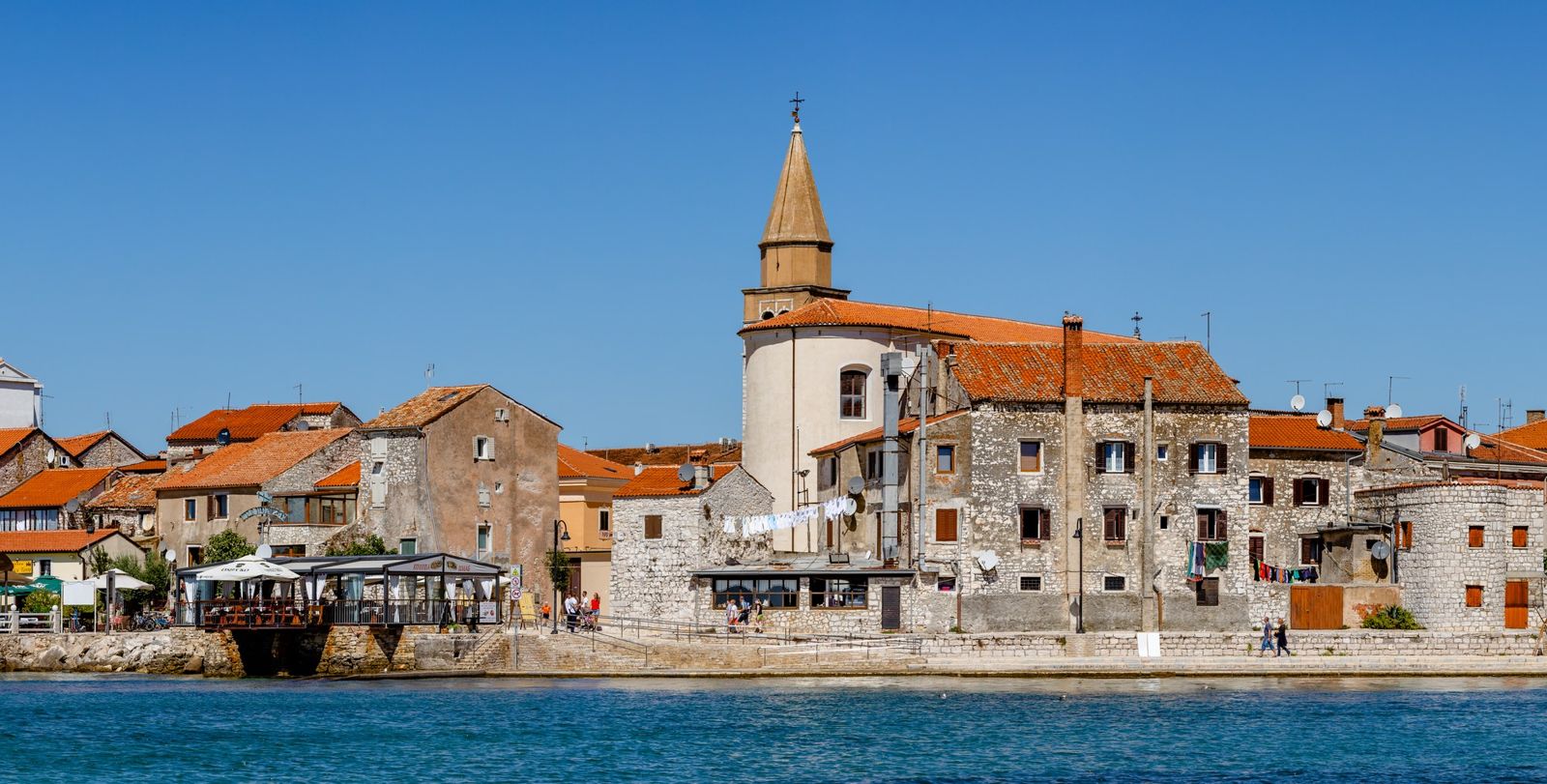
Many foreign owners fall in love with Istria in summer: long sunny days, a warm sea, pine shade and stone villages on the hills. The house, however, lives here all year. The same climate that makes the summer so pleasant also wears down roofs, windows, paint and walls, often faster than owners from Germany, the Netherlands or the UK expect.
This article looks at the main forces at work, what kind of damage each one causes, and the materials and habits that help a house cope. It applies to the coast and the inland hill towns alike, although the balance between them is different.
The bura: wind that tests every weak point
The bura (bora) is a cold, dry, north-easterly wind that comes down from the mountains in gusts, mostly in autumn and winter. It is strongest on the eastern side of the peninsula, around Labin/Albona and the Kvarner coast, but it can blow hard anywhere in Istria. Gusts arrive suddenly and from one direction, which is why old houses often have few or small windows on the north-east side.
What the bura does to a house:
- Roofs. Lifts loose or badly fixed roof tiles, especially at the edges and ridge. One missing tile is enough for the next rain to soak a ceiling.
- Shutters and doors. Bangs unsecured škure (wooden shutters) until hinges, catches or glass break.
- Windows. Pushes rain through tired seals and badly fitted frames; drafts become very noticeable.
- Outdoor items. Moves or breaks furniture, parasols, shade sails and pergola covers.
- Trees. Breaks branches, especially on large pines close to the house.
The fix is mostly about secure fixing and good maintenance: roof tiles properly fixed at the edges, shutter catches that actually hold, solid window frames and seals. If your windows rattle and leak in strong wind, our guide to choosing windows near the sea explains the options, and our window and door installation team can replace them.
Salt: the slow damage near the sea
Close to the sea, the air carries fine salt, and strong wind can carry salt spray further inland. Salt settles on every surface and attracts moisture. Over the years it causes:
- Rust on steel railings, gates, fixings, screws and hinges.
- Corrosion on air-conditioning units, outdoor lights and electrical boxes.
- Pitting and staining on cheaper aluminium and metal fittings.
- Salt crystals in stone and plaster, which push paint and plaster off the wall from the inside.
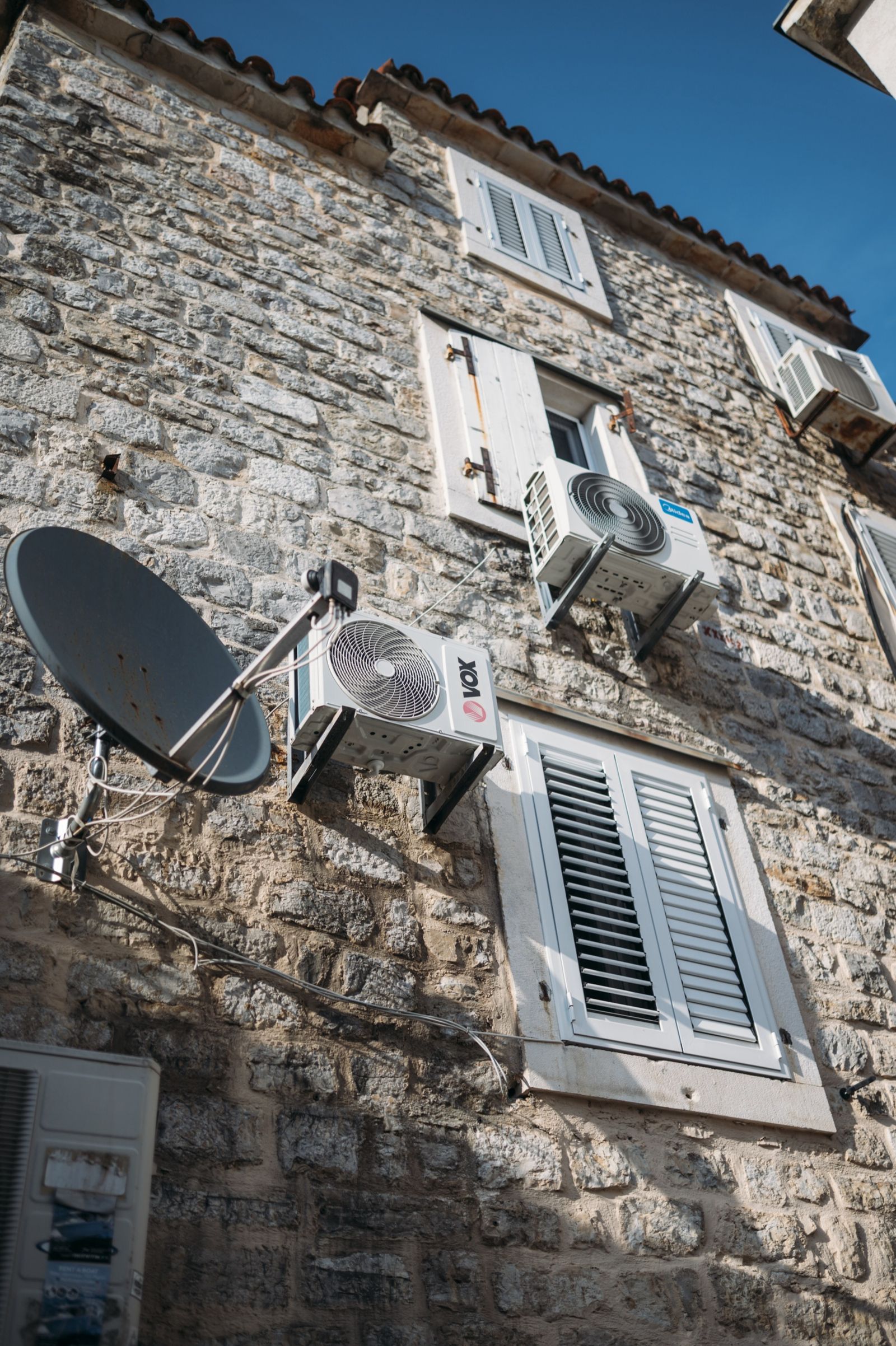
Near the sea it pays to choose stainless or coated fixings, metalwork that is protected against corrosion, and paints made for exterior use in a coastal climate. Rinsing outdoor units and metal railings with fresh water now and then also helps. Salt in walls is a separate story: it often comes from the ground or from the original building materials, and it is one of the main causes covered in damp in old stone walls.
Sun and heat: UV, expansion and hot rooms
Summer sun in Istria is intense, and south- and west-facing walls take the full force of it for months. That shows up as:
- Faded and chalky paint on facades, shutters and doors.
- Cracking and peeling varnish on wooden windows and doors facing south or west.
- Brittle silicone joints and plastic parts on terraces.
- Cracks where materials expand and shrink at different rates, for example between a concrete terrace and old stone.
- Hot top-floor rooms under badly insulated roofs.
Thick stone walls are actually excellent in summer: they absorb heat during the day and keep rooms cool. The weak spots are usually the roof and newer extensions with thin walls. Insulating the roof or the top-floor ceiling often makes the biggest difference, as explained in insulating an old house in Istria. Outside, regular repainting of shutters and facades with suitable paint keeps wood and render protected.
Winter damp: the season most owners never see
Istrian winters are mild but wet. Rain can fall for days, especially in autumn, and humidity stays high. A house that is empty and unheated from October to April cools down, and moisture condenses on its coldest surfaces. Stone walls also draw moisture up from the ground.
The result is the familiar spring picture: mould in corners, a musty smell, peeling paint at the bottom of walls. Cement plaster and plastic-based paints make it worse, because they trap moisture inside old stone walls. Breathable lime plaster and mineral paints let the wall dry out.
For what to do when the house stands empty, see looking after a holiday home between seasons.
Pines, terra rossa and hard water
Three more local features are worth knowing:
- Pine trees. Beautiful shade, but needles fill gutters and flat roofs every year, resin marks terraces and cars, and roots can lift paving, crack low walls and get into old drains. Large pines close to the house also lose branches in storms.
- Terra rossa. The red soil of Istria stains terraces, steps and light-coloured stone, and it clogs drains after heavy rain. A good doormat and regular cleaning of drains help.
- Hard water. Istria sits on limestone, so tap water is hard. Limescale builds up in taps, shower heads, kettles, washing machines and water heaters, and shortens their life.
Our garden and outdoor care covers cutting back vegetation and keeping the outside of the house in order, while plumbing work deals with limescale problems, old pipes and water heaters.
Coast or inland: what changes
On the coast, salt and sun are the main enemies; metal, paint and outdoor units age fastest. In the inland hill towns such as Motovun/Montona or Grožnjan/Grisignana, there is less salt but colder winters, more frost and fog, and old stone houses that hold a lot of moisture. On the east coast, the bura is the main concern. Wherever you are, a house that is checked twice a year and repaired early costs far less than one that is left until something fails.
We work across all of Istria through our holiday home maintenance and urgent repairs service, bringing in the right trade from our network for each job.
Seeing rust, peeling paint or damp in your Istrian house? Send a few photos on WhatsApp and we will tell you what is behind it and roughly what the repair would cost.
Frequently asked questions
What is the bura and how does it affect houses in Istria?
The bura is a cold, gusty north-easterly wind, strongest in autumn and winter and especially on the eastern side of Istria. It lifts loose roof tiles, bangs unsecured shutters, pushes rain through old window seals and breaks branches. Good fixing and maintenance are the main protection.
Does sea air damage a house near the coast?
Yes, slowly. Salt in the air causes rust on railings and fixings, corrosion on air-conditioning units and outdoor lights, and can damage paint and plaster. Corrosion-resistant fixings, suitable exterior paints and rinsing metal parts with fresh water help.
Why does my Istrian stone house get mouldy every winter?
An empty, unheated stone house cools down and moisture condenses on cold surfaces, while the walls draw moisture from the ground. Cement plaster and plastic paints trap it. Ventilation, breathable lime plaster and fixing any leaks usually solve it.
Are pine trees near the house a problem?
They can be. Needles block gutters and flat roofs, roots can lift paving and damage drains, and large branches can break in storms. Regular gutter cleaning and keeping an eye on large trees close to the house help.