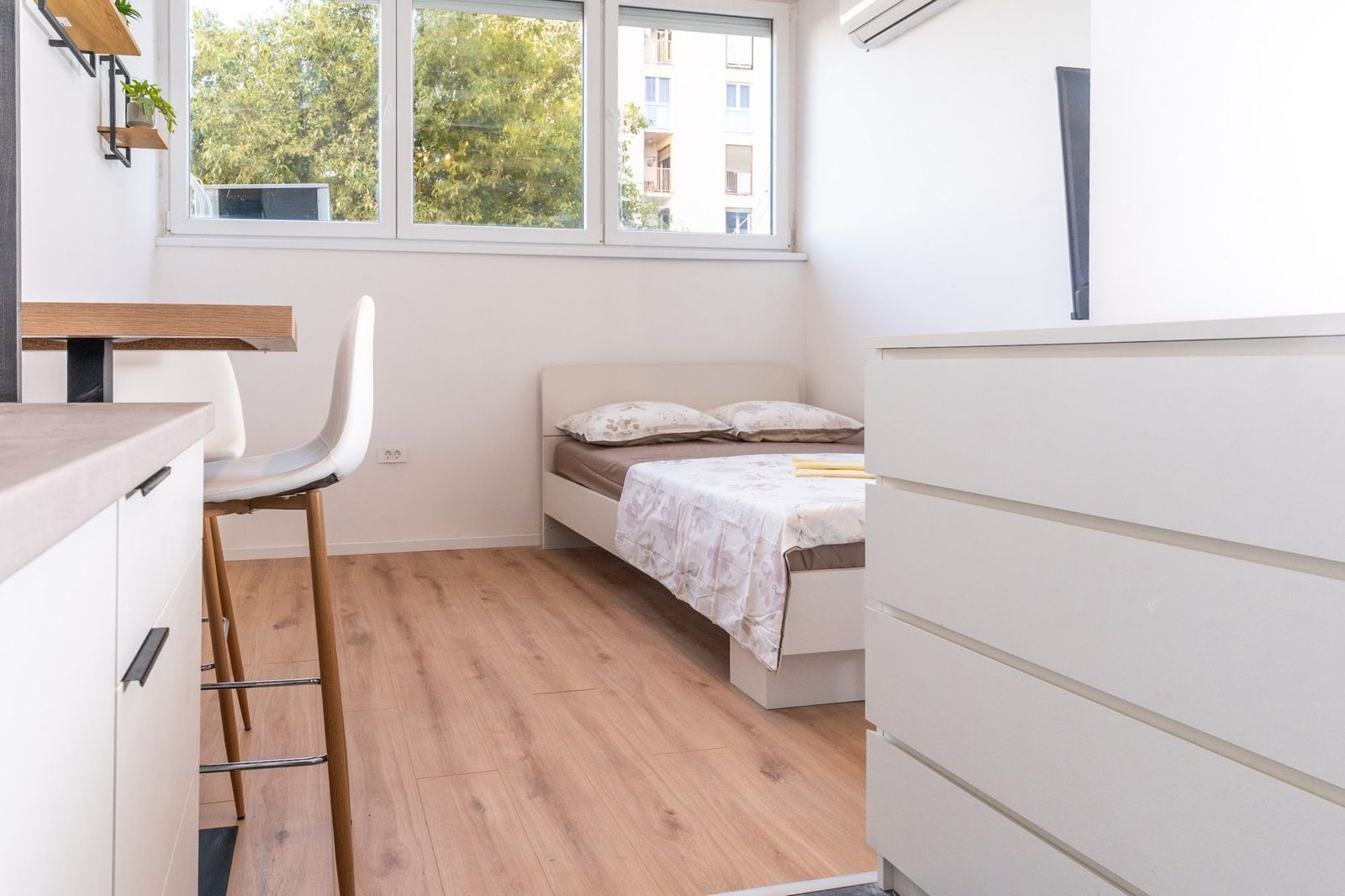
Many family houses in Istria were built with rentals in mind: a ground floor for the owners, a floor or two for guests, an outside staircase, a big terrace. Others are a single family home that a new owner wants to divide into two or three holiday apartments. Either way, the idea is simple, but the details decide whether the units are pleasant to stay in, easy to clean and allowed to be rented.
This guide walks through the main decisions, from layout to soundproofing, and explains in general terms how registration and categorisation of holiday rentals work in Croatia. It does not replace advice from an architect or the local authorities, but it will help you ask the right questions.
Start with the rules, not the floor plan
Before you draw any walls, find out what is possible for your particular house. Turning one home into several units can count as a change that needs formal approval, depending on the building, its legal status and what exactly you change. Adding bathrooms, new entrances or openings in load-bearing walls are typical points where an architect or structural engineer should be involved.
- Check the building's legal status. Make sure the house as it stands matches the documents. Unregistered extensions can cause problems later when you register the rental.
- Ask about the number of units. Local planning rules can affect how many units a building may have and whether parking spaces are required per unit.
- Talk to the local tourist board early. They can explain the current registration process and the minimum requirements for the type of accommodation you have in mind.
- Involve an architect for structural changes. Our general guide to renovation permits in Croatia explains what usually needs approval and what usually does not.
Layout: how to divide the house
The best layouts follow the house rather than fight it. In a typical two-storey Istrian house the floors are the natural division: one unit per floor, connected by an existing or new outside staircase. In larger houses, a floor can sometimes be split into a one-bedroom apartment and a studio.
- Use existing wet areas. Place new bathrooms and kitchens near existing drains and stacks where possible. Long horizontal drain runs are where problems start.
- Think about guest numbers. A unit for four people needs a usable kitchen and dining area for four, enough storage for luggage, and ideally a second toilet or a well-placed bathroom.
- Keep light and views fair. Guests compare listings. A unit with no outdoor space or a dark living room will be harder to rent than one with a small balcony.
- Plan for the owner. A lockable storage room for linen, cleaning materials and spare parts makes changeovers much easier.
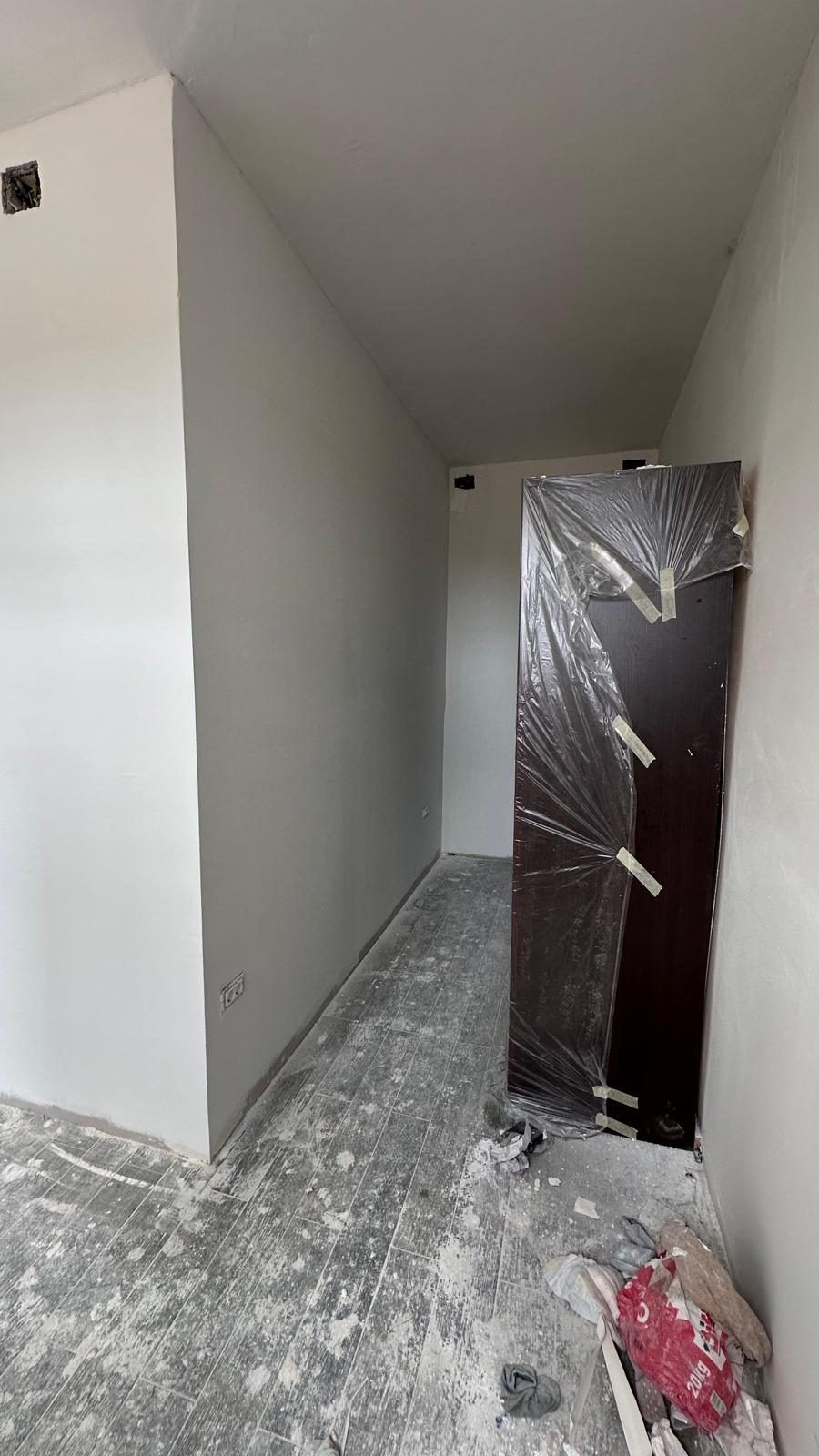
New partitions are often built in drywall: they are quick, light and easy to run cables and pipes through. Our drywall team builds partitions with insulation inside, which also helps with sound between units.
Bathrooms and kitchens for each unit
Every apartment needs its own bathroom, and in practice each bedroom with its own bathroom rents better. Rental bathrooms work harder than family ones: more showers per week, guests who do not know the house, long empty periods in winter.
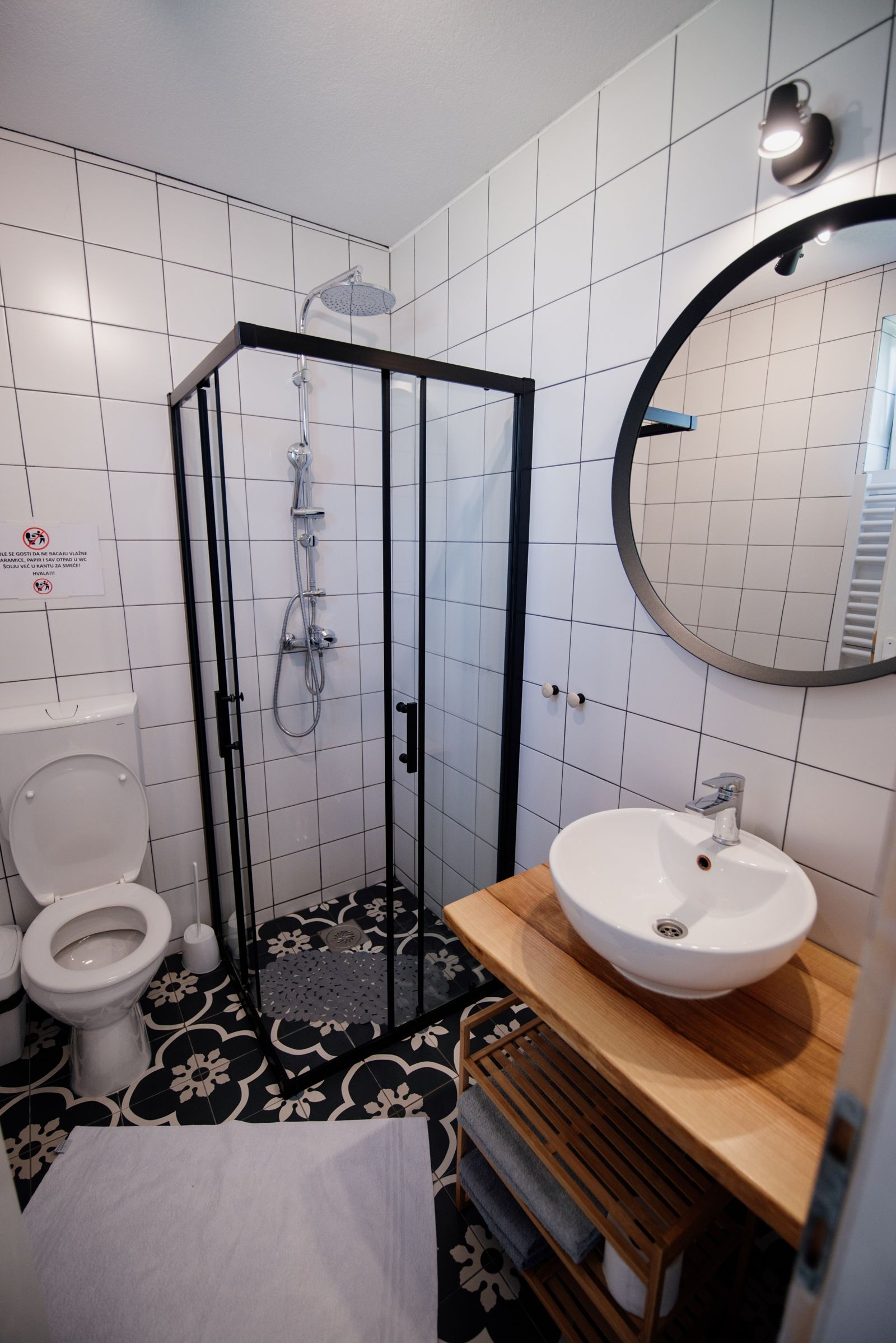
- Walk-in or corner showers are easier to clean and safer than bathtubs for most guests.
- Good ventilation with an extractor fan prevents mould, especially in bathrooms without windows.
- Durable tiles and simple fittings that are easy to replace. Avoid unusual brands that cannot be sourced locally.
- One water heater per unit or a central system sized properly. Running out of hot water when a family of four showers in a row is a classic complaint.
Our bathroom renovation and kitchen installation services cover this part, and our article on bathrooms for holiday rentals goes into materials and details.
Sound, privacy and separate entrances
Noise is one of the most common complaints in shared houses. Guests on holiday keep different hours: children wake early, other guests come back late from the beach bar. Planning for sound costs little during renovation and a lot afterwards.
- Insulated partitions between units, with mineral wool inside and, where needed, double boards.
- Floors between storeys are the hardest part. An acoustic underlay under new flooring helps with footsteps; heavier solutions depend on the structure.
- Separate entrances give each unit privacy. An outside staircase, a separate garden gate or a shared hallway with lockable doors are typical solutions.
- Separate outdoor spaces. Even a small terrace with a screen or planting gives each group their own place.
Services: electricity, water and heating
When one house becomes several units, the existing installations often reach their limits. Several air conditioners, kitchens, water heaters and dishwashers running at once need adequate capacity and proper circuits. Have a qualified electrician assess the installation; our electrical work is carried out by qualified electricians from our network, and our article on electrical upgrades in old houses explains the typical issues.
Ask early whether separate meters per unit are possible or sensible for your house, as this affects both the installation and how you account for running costs. The same applies to plumbing: water pressure on upper floors, enough hot water and accessible shut-off valves for each unit.
Registration and categorisation in general terms
In Croatia, private holiday accommodation has to be registered before it is rented out, and each unit receives a category based on its size, equipment and standard. The exact requirements, procedures and documents change over time and can differ in detail, so treat the points below as an overview only.
- Minimum standards typically cover things like room sizes, bathroom equipment, kitchen equipment, beds and furniture.
- Higher categories usually require more space and better equipment, for example air conditioning or more bathrooms per guest.
- Inspection and paperwork are handled through the competent local office. The local tourist board can tell you where to start and what is currently required.
- Taxes and fees for rentals are a separate topic. Ask an accountant or the tourist board for current rules.
Once the units are finished, our pre-season checklist for holiday rentals helps you get everything ready for the first guests.
Budget and timing
Costs vary widely depending on how much changes: a house that already has two kitchens and two bathrooms is a very different job from one where every unit needs new plumbing, wiring and a bathroom. Our free renovation cost calculator gives you a first rough range. Plan the main work outside the tourist season, and leave time for approvals before the builders start. If you would like one contact person to coordinate the trades, that is how our renovation service works.
Thinking about turning your house into holiday apartments? Send us photos and a rough floor plan on WhatsApp and we will tell you what is realistic and what it might roughly cost.
Frequently asked questions
Do I need a permit to turn my house into holiday apartments in Croatia?
It depends on the house and on what you change. Creating new units, new entrances or changing load-bearing walls can require formal approval. Check with a licensed architect and your municipality before starting, and with the local tourist board about registration.
How is a holiday apartment categorised in Croatia?
Private accommodation is registered and given a category based on its size, equipment and standard. The requirements and procedure are set by the authorities and can change, so ask the local tourist board for the current rules before you plan the layout.
Does every holiday apartment need its own bathroom and kitchen?
In practice, yes. Guests expect a private bathroom and a kitchen or kitchenette in each apartment, and minimum requirements for categorisation usually include them. Ask the tourist board for the exact requirements for your type of unit.
How can I reduce noise between apartments in one house?
Use insulated partitions between units, acoustic underlay under new floors, separate entrances and separate outdoor spaces. Planning this during the renovation is much cheaper than fixing it later.
Can the conversion be managed while I live abroad?
Yes. We work with one contact person, send regular photo updates and arrange decisions via WhatsApp and video calls. Approvals and registration still need to be handled with your architect and the local authorities.