Dry-stone walls (suhozid) and the stone field huts called kažuni are built without mortar, and they should be repaired the same way. A proper repair takes down the loose section, sorts the stone and rebuilds it with a slight inward lean, long stones tying the two faces together, a tightly packed core and heavy stones on top. Patching a dry-stone wall with cement usually makes the next collapse worse.
If you own an old house or land in Istria, you probably own some of this heritage: field walls, terraces under olive groves, perhaps a kažun. Here is why it falls down, how a good repair is done, and how to organise it from abroad.
What are suhozid, kažun and masiere?
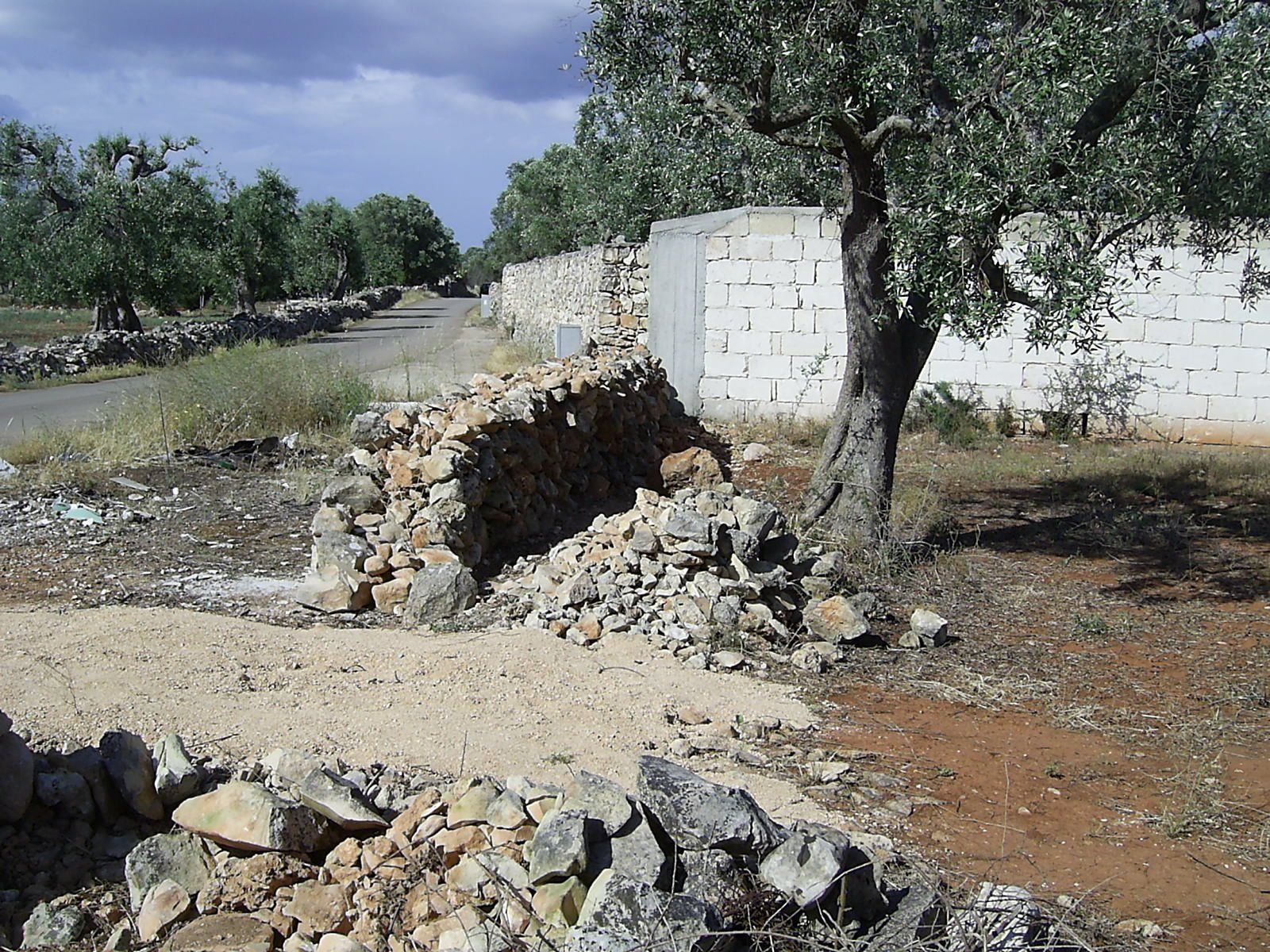
A suhozid is a dry-stone wall: limestone stacked by hand without mortar (Italian muretti a secco). For centuries Istrian farmers cleared stone from their fields and built it into walls, terraces and shelters. Around Vodnjan/Dignano, masiere are fields enclosed by dry-stone walls, groumasi are huge heaps of cleared stone, and casite is the local Italian name for kažuni.
A kažun is a small field shelter, usually round, sometimes square, with a conical roof of overlapping stone slabs. Farmers used them for shelter from rain and sun, during harvest and for animals. The Istrian tourist board counts more than 3,000 in the Vodnjan area alone. The Kažun Park in Vodnjan, opened in 2012, shows how one is built in four stages, and the Town of Vodnjan has for years run a public workshop each May, Moj kažun – La mia casita, to keep the technique alive.
In 2018 UNESCO added the Art of dry stone walling, knowledge and techniques to its list of the Intangible Cultural Heritage of Humanity as a joint listing of eight countries, including Croatia; it was extended to 13 countries in 2024. Croatia had entered the craft in its national register of intangible heritage in 2016. That protects the knowledge, not automatically every wall, but it is a good reason to repair rather than remove.
Why do dry-stone walls collapse?
A well-built wall can stand for centuries. Most collapses have one of these causes:
- Roots. Ivy, brambles, figs and self-sown trees grow into the joints and push the faces apart.
- Water. Run-off, a blocked drain or a downpipe emptying against a terrace wall washes out the core and the soil behind.
- Missing coping. The heavy top stones lock the wall. Once they are knocked off or taken, rain gets in and the upper courses loosen.
- Animals. Wild boar rooting along the foot of a wall can undermine the foundation stones.
- People and machines. Vehicles bumping into walls, stones taken away, or soil piled against a wall never meant to hold it.
Warning signs are a bulge in the face, stones sliding out of line, a lean, or small stones trickling out of the core. A bulge means the wall is already moving; repairing a few metres now costs far less than rebuilding a long stretch later.
How is a dry-stone wall repaired properly?
Pushing stones back into a hole rarely lasts. A good builder takes the damaged section down and rebuilds it:
- Clear and dismantle. Remove vegetation and roots, then take the wall down to sound stone, stepping the ends so the new work bonds into the old.
- Sort the stone. Big foundation stones, building stones for the faces, long through-stones, small stones for the core (the hearting) and flat heavy stones for the top (the coping).
- Foundation. The largest stones go on firm ground or bedrock, slightly below ground level.
- Build with a batter. Each face leans slightly inwards as it rises, stones are laid lengthways into the wall, and every joint is covered by the stone above.
- Through-stones and hearting. Long stones span the full width at intervals to tie the faces together, and the core is packed tightly by hand, never with soil.
- Coping. Heavy stones on top lock everything in place.
Why not just use cement?
Because a dry-stone wall works by being dry. Water drains through the joints and the wall can settle slightly without breaking. Cement blocks the drainage, so water builds up behind terrace walls and pushes them out, and a rigid patch cracks away from the flexible stonework around it. The same logic, lime instead of cement, applies to your house walls, as our guide to renovating an Istrian stone house explains.
Boundary walls and terrace walls: what is the difference?
A free-standing boundary wall has two faces and only holds itself up. A terrace (retaining) wall has one face and holds back a slope of soil, so it needs larger stones, a stronger batter and free-draining stone behind it. If it supports a road, driveway or building, ask a structural engineer before it is rebuilt. Rules for new or higher walls depend on the municipality, so check before changing a wall's height or line.
Be careful about moving or removing walls. They very often mark the boundary (međa) between parcels, and the cadastral map does not always match the wall on the ground. Talk to the neighbour first and, if in doubt, have a licensed surveyor (ovlašteni geodet) mark the line. Our guide to the land registry and cadastre in Croatia explains why papers and reality differ, one of the things about building in Croatia that surprise foreigners.
What should you do with a kažun on your land?
The roof of a kažun is a false dome: each ring of flat stones projects slightly inwards over the one below until a capstone closes the top. Plants rooting in the roof, a slipped ring of slabs or a missing capstone let water in, and once the roof opens the walls follow.
- Stabilise and restore. Clear the vegetation carefully, then have loose roof courses and walls reset by someone who knows the technique.
- Use it as it is. A sound kažun makes a lovely garden feature, a shady seat or a store for tools.
- Converting it into living space is a different matter. Kažuni are small, have no real foundations and often stand on agricultural land. Whether any change is possible depends on the spatial plan and the structure's legal status, so ask the municipality or a licensed architect first.
How much does dry-stone wall repair cost?
There is no reliable published price list for Istria, and a short field wall and a tall terrace wall differ many times over. What moves the price:
- Access. Whether a vehicle can get close, or every stone is moved by hand.
- Stone. Whether enough original stone is on site, or more must be found and transported.
- Type and height. A low boundary wall is far simpler than a high retaining wall.
- Length and condition. How much has to be dismantled, and how overgrown it is.
Compare offers on a clearly defined section, priced after a site visit. Subsidies exist mainly for farmers: Croatia's 2014–2020 Rural Development Programme listed building dry-stone walls among eligible costs, but for registered farms, public bodies and associations. If you run a registered farm, ask the Paying Agency for Agriculture (APPRRR) about current calls; most private owners pay themselves.
Who can do the work, and how can we help?
The Croatian association Dragodid runs workshops and volunteer restorations and keeps a free notice board, the Burza suhozida, where dry-stone builders from across Croatia, including Istria, offer their work. It does not check the listings, so ask to see earlier work.
We are not dry-stone masons. What we do is the work around the wall: clearing overgrowth with our garden and outdoor care team, removing rubble, old cement patches and green waste through our demolition and waste removal service, sorting access and transport, and connecting you with a dry-stone specialist from our network. For the wider garden, see Mediterranean garden care in Istria.
Send us a few photos of the wall or kažun on WhatsApp, ideally with something for scale, and tell us where the property is. We will tell you what we see and how we can organise the clearing and the repair.
Frequently asked questions
Can I repair a dry-stone wall with cement?
It is not recommended. Dry-stone walls drain through their joints and can settle without breaking. Cement blocks the drainage, traps water behind terrace walls and cracks away from the stonework. The right repair is to rebuild the loose section dry, reusing the original stone.
Are kažuni protected in Istria?
The craft is on the UNESCO intangible heritage list and in Croatia's national register, but that does not make every kažun a protected monument. Individual structures can be protected by the heritage register or local plans, so check with the municipality before altering or removing one.
Can I remove a dry-stone wall on my land in Croatia?
Check first. Many walls mark the boundary between parcels, and the cadastral map may not match the wall on the ground. Talk to the neighbour, have a licensed surveyor confirm the boundary if needed, and ask the municipality whether local rules apply.
Can a kažun be turned into a bedroom or holiday unit?
Usually not easily. Kažuni are small, have no proper foundations and often stand on agricultural land with strict rules. Restoring one as a garden feature is straightforward; any change of use needs advice from the municipality or an architect.
How much does it cost to rebuild a dry-stone wall in Istria?
It depends on access, whether the original stone is still on site, the height and type of wall, and how much must be dismantled and cleared. Ask for a price for a clearly defined section after a site visit.