If you are looking at property in Istria, you will quickly notice that listings mix very different buildings under the same word: house. A 300-year-old stone farmhouse near Motovun/Montona, a narrow townhouse in the old centre of Rovinj/Rovigno and a two-storey block house from 1985 outside Poreč/Parenzo may cost similar money, but they behave completely differently once the builders arrive.
This guide walks through the main types of houses you will find in Istria and what each one usually means for renovation: the typical problems, the work that tends to be needed and the questions worth asking before you sign.
1. The traditional stone farmhouse
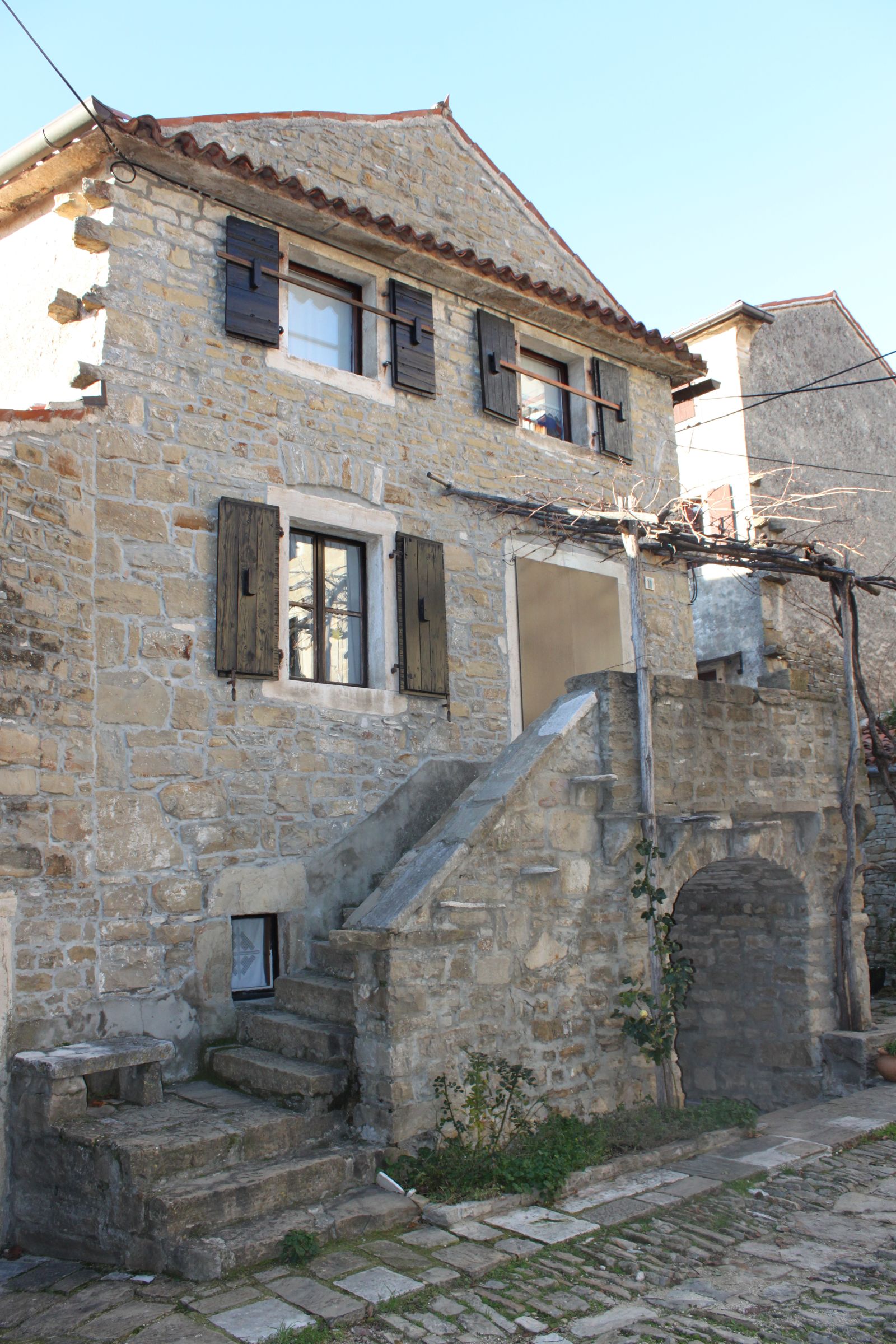
The classic Istrian house is built from local limestone, laid with lime mortar or, in older outbuildings, almost dry. Walls are thick, often 50 to 70 cm, windows are small and the roof is usually covered with curved clay tiles (kupe) on timber rafters. Many have a baladur: an external stone staircase leading up to a small landing and the first-floor entrance, with the konoba (the cellar for wine, oil and tools) underneath.
These houses are the reason many people fall in love with Istria, and they reward careful work. They also hide the most surprises:
- Damp. Old walls have no damp-proof course and were designed to breathe. Cement render and plastic paints added in the 1970s and 80s often trap moisture inside.
- Roof timbers. Rafters and beams can be rotten at the wall ends, where rainwater has been getting in for years.
- Upper floors. Timber floor beams may need strengthening or replacement, especially if you plan heavier finishes such as tiles.
- Services. Wiring, plumbing and drainage are often minimal or improvised, and some rural houses still rely on a septic tank.
We cover this type in detail in renovating an Istrian stone house, and if you are considering a roofless building, read buying a ruin in Istria first.
2. The old-town house
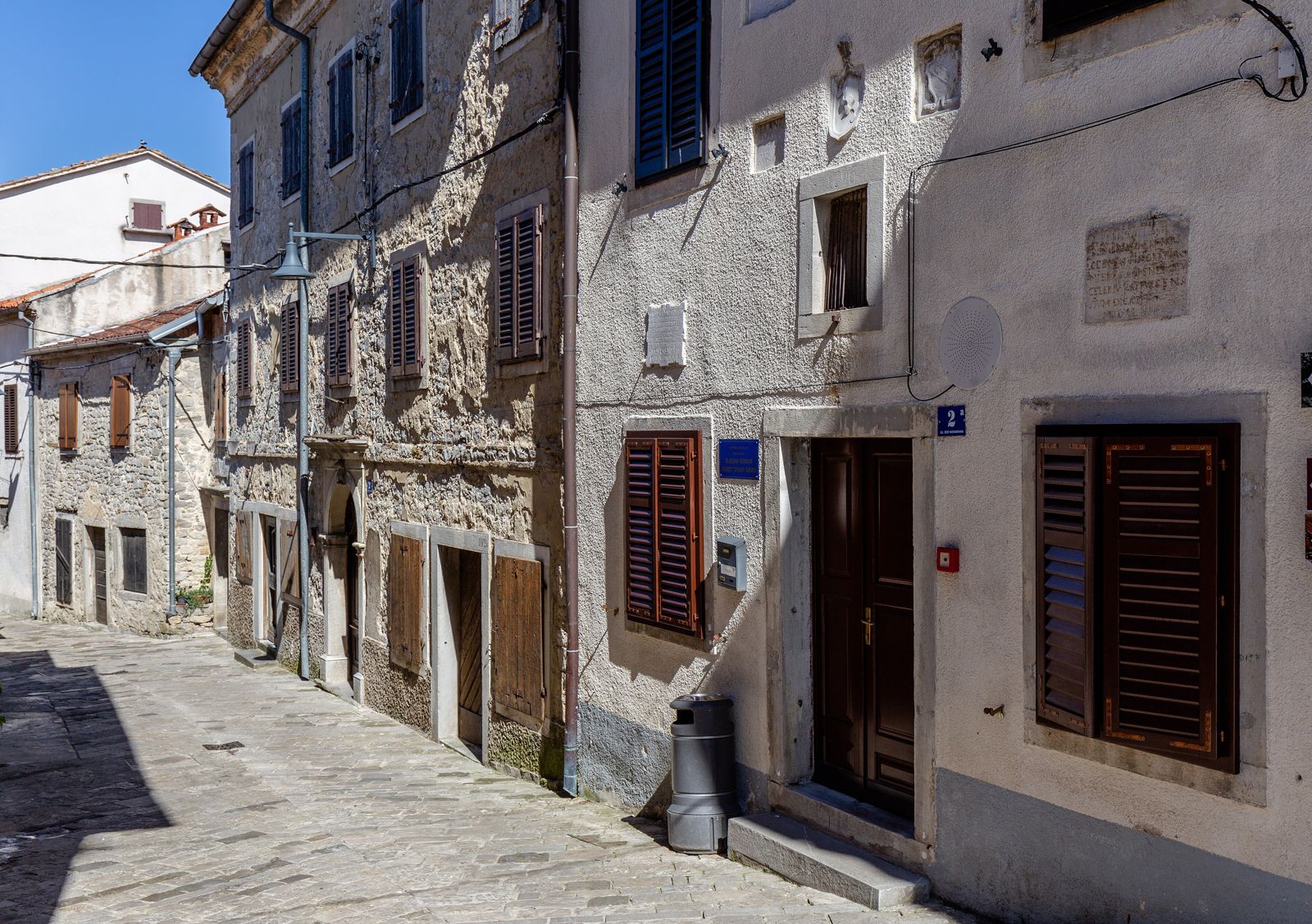
In the historic centres of Rovinj, Poreč, Pula/Pola, Novigrad, Grožnjan/Grisignana or Labin you will find tall, narrow houses squeezed together along stone lanes. Many date from the Venetian period, have shared walls with the neighbours and stand on several levels with steep internal stairs.
The building itself is often similar to a farmhouse (stone walls, timber floors, clay tile roof), but the renovation is shaped by the location: no car access, deliveries by hand or small vehicle, neighbours on every side, limited working hours in summer, and protected-zone rules for facades, windows and roofs. Our guide to renovating an old-town house in Rovinj, Poreč or Pula goes through the practical side.
3. The 1970s–1990s family house
A large share of houses in Istrian villages and on the edge of towns were built between the 1970s and the 1990s, often by the family itself, floor by floor. They are usually built from clay or concrete blocks with concrete floor slabs and ring beams, rendered outside and with a pitched tile roof. Many have a ground-floor apartment, a first-floor apartment and sometimes an unfinished attic.
Structurally these houses are often sound and easier to adapt than stone buildings. The typical work is:
- Energy. Little or no insulation, old single or early double-glazed windows. New windows and facade or interior insulation make a big difference in winter and summer.
- Wiring and plumbing. Original installations are now 30 to 50 years old and rarely sized for air-conditioning, induction hobs or a heat pump.
- Bathrooms and kitchens. Usually original, so a full strip-out is common.
- Layout. Small rooms and narrow corridors; non-load-bearing walls can often be moved, but always check with an engineer before touching any wall.
See modernising a 1970s–1990s house for a full checklist. This is also the house type where an electrical upgrade by qualified electricians is most often worth doing early.
4. Newer villas and holiday houses
Since the 2000s many houses have been built specifically for holiday rental: rendered or stone-clad villas with a pool, open-plan living and a bathroom for every bedroom. Here renovation is usually about wear rather than structure: tired bathrooms, swollen kitchen doors, faded exterior paint, sun-damaged shutters, pool surroundings and terraces.
The main question is how the house is used. A rental villa needs durable finishes and quick repairs between guests, so planning around the season matters as much as the work itself. Our holiday home maintenance service is built around exactly this.
5. Apartments in town
Flats in Pula, Poreč, Rovinj or Umag range from Austro-Hungarian buildings with high ceilings to concrete blocks from the 1960s to the 1980s and modern residential buildings. The work inside your own walls is usually straightforward (bathroom, kitchen, floors, painting), but you share the building: work on facades, roofs, risers or the structure normally needs the agreement of the other owners, and many buildings have house rules on noise and working hours. Read renovating an apartment in Pula for more.
6. Outbuildings, konobas and kažuni
Many rural plots come with a stone barn, stable or separate konoba. These can make lovely guest rooms or a summer kitchen, but they were never meant for living: floors sit on bare earth, there is little light and no insulation. Turning them into living space is possible, but plan for damp control, new floors, windows and services, and check what the planning rules allow. See turning a konoba into living space.
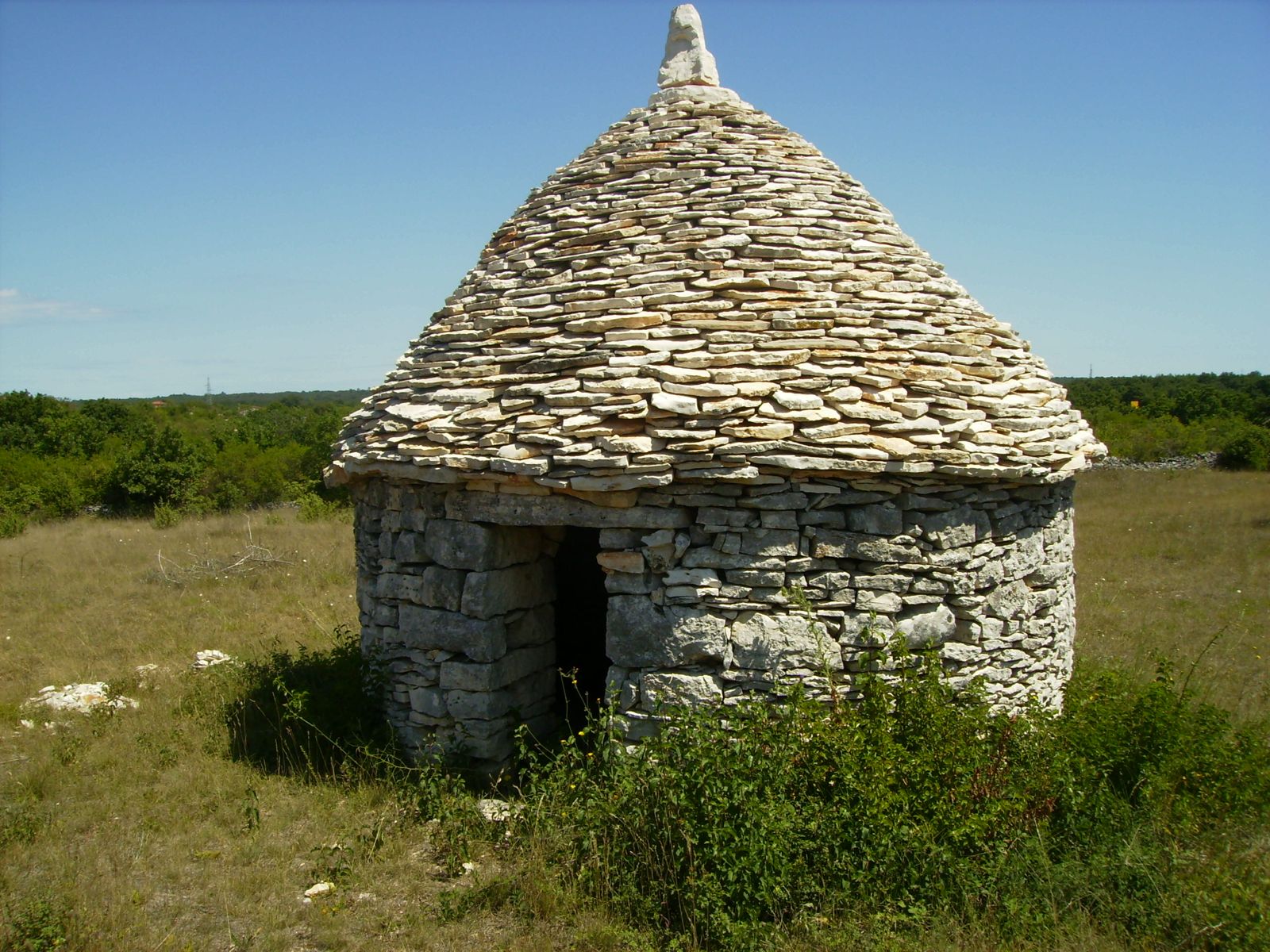
A kažun is the round dry-stone field hut you see in olive groves and vineyards, especially around Vodnjan/Dignano. It is part of Istria's heritage, not a house. Repairing one with a skilled dry-stone waller is worthwhile; turning it into a bedroom generally is not.
What this means for your budget
| House type | Typical main work | Hidden-cost risk |
|---|---|---|
| Stone farmhouse | Roof, damp, lime plaster, floors, all services | High |
| Old-town house | Similar to farmhouse, plus access and protected-zone rules | High |
| 1970s–1990s house | Windows, insulation, wiring, bathrooms, kitchen | Medium |
| Newer villa | Bathrooms, paint, shutters, outdoor areas | Low to medium |
| Town apartment | Bathroom, kitchen, floors, painting | Low to medium |
Costs depend on size, condition, access and finishes far more than on the house type alone. For a first feel for the numbers, try our free renovation cost calculator, and read how much a renovation costs in Istria. For a stone house, keep a generous contingency: what you find behind old plaster is part of the job.
Whatever you buy, it helps to have one person coordinating the trades. For a full house or apartment renovation we bring in the right tradesman from our network for each stage and keep you updated with photos while you are abroad.
Thinking about buying, or already own a house in Istria? Send us photos or a short video on WhatsApp and we will tell you what kind of work to expect and give you a rough price range before a visit.
Frequently asked questions
What is a baladur on an Istrian house?
A baladur is the external stone staircase typical of traditional Istrian houses. It leads up to a small landing and the first-floor entrance, while the ground floor underneath was used as a konoba or storage. When renovating, the steps and landing often need repointing and a check of how rainwater drains away from the wall.
Can I live in a kažun?
Generally no. A kažun is a small round dry-stone field shelter, part of Istria's rural heritage, and is not suitable or usually permitted as living space. It can be repaired by a skilled dry-stone waller and kept as a garden feature or storage.
Is an old stone house more expensive to renovate than a 1980s house?
Usually yes, per square metre. Stone houses often need work on the roof, damp, floors and all services, and you only see the full picture once old plaster and floors are opened. A 1970s–1990s block house is typically more predictable, with most of the budget going on windows, insulation, wiring, bathrooms and the kitchen.
What should I check before buying a house in Istria?
Check the legal status of the building with a local lawyer, and have the roof, walls, damp, wiring, plumbing and drainage looked at by someone who knows old houses. Ask whether the house is in a protected zone and how materials can be delivered. Photos and a short video sent to a renovation team can give you an early idea of the work involved.